Eng


The Elephant Rock, situated near Castelsardo, is a large block of trachyte shaped like a seated elephant, formed over millennia by weathering. It is just a short walk from the beautiful seaside village of Sardegna: we recommend you visit it to learn about the origins of this ancient land. The rock is about four metres high and contains two important domus de janas dating back to the pre-Nuragic period. Here’s a brief insight.
The domus de Janas are small caves found throughout the island; they were the ancient dwellings of those who lived in Sardegna from the end of the 4th to the 2nd millennium BC. For the ancient Sardinians of the medieval period, who were heavily influenced by superstition and folk beliefs, these caves were thought to be inhabited by fairies and witches. In reality, these underground tombs, or ‘grotticella’, represent a burial type that is very characteristic of the Mediterranean. They date from the Neolithic through to the Bronze and Iron Ages and are found throughout Sardegna. The Domus were burial caves hewn out of the rock. The Sardinians, like other Mediterranean peoples, buried their dead there. The chambers were arranged side by side in large numbers: they formed necropolises capable of holding up to a hundred bodies. The bodies were laid to rest in a foetal position, and placed alongside them were all the objects that might be needed for the journey to the afterlife.
‘Domus’ means ‘house’ in Latin, and we can interpret the Domus de Janas as the houses where the dead rested. These houses were about half the size of dwellings of the time. Their appearance is of paramount importance and makes the Sardinian Domus de Janas unique. Thanks to them – which are very often richly decorated – we can imagine what homes were like 5,000 years ago.
Photo by wiseguy71

Explore the culture and nature of Northern Sardinia: places to discover, local dishes, traditions and stories from the region.


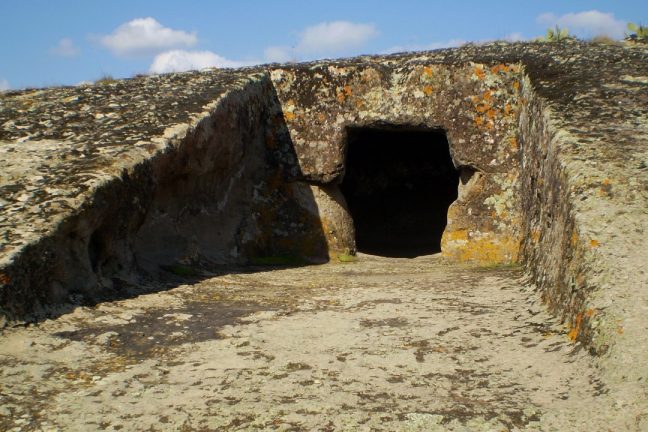
‘Domus de Janas’ is a Sardinian expression meaning ‘house of the fairies’. Legends tell of beings that are not particularly spiritual – demons, somewhere between human and divine.

Sardegna has a wine-making tradition stretching back thousands of years; the earliest evidence of wine-making dates as far back as 1400 BC.

There is a story linked to the island of Tavolara which tells that King Carlo Alberto of Savoy appointed his only son as king of the island.

The Ludurru necropolis is situated in Buddusò, and the domus de janas date back to 3200–2800 BC, famous examples of the Sardegna Neolithic period

The Neptune Caves are spectacular caves dating back to prehistoric times. They are located at Alghero, in Northern Sardinia

The Church of St Francis in Alghero is one of the finest examples of Catalan Gothic architecture in Sardegna