Eng


Northern Sardinia is brimming with
culinary
delights
,
gastronomic treasures
and traditional DOC and DOP products
. How many of them do you know? In this article, Salude&Trigu reveals 10 culinary and wine specialities from Northern Sardinia
that you must try at least once in your lifetime. The list is by no means exhaustive, but these gems offer a taste of the culinary traditions
of the north of the island.
Here they are 👇
Northern Sardinia myrtle
is a true local speciality. From the plant of the same name and its juicy berries comes a fragrant liqueur
famous throughout the world. An excellent digestif
, to be enjoyed at the table with family or friends, myrtle liqueur is one of the most highly prized local specialities
.
Myrtle liqueur
is made from the berries harvested between November and January, though December
is the best time. Once produced, it is distinguished by its red colour with hints of purple and ruby
, and its creamy yet not overly thick consistency.
The myrtle plant has been known since ancient times for its balsamic, antiseptic, astringent and anti-inflammatory properties
. In the Middle Ages, the so-called ‘Acqua degli Angeli’
(Water of the Angels
) was extracted from myrtle flowers and used as a skin tonic. In short, myrtle is a true treasure
of Sardegna.
Vermentino
is grown in various Italian regions, but it is in Sardegna that it finds its ideal climate
, developing aromas that evoke the landscapes from which it originates.
It is a white wine
highly prized by connoisseurs, straw-yellow in colour
and with an intense bouquet, featuring fruity and floral notes
.
It is produced as a single-varietal wine or with at least 95 per cent Vermentino grapes. There is a wide variety of Vermentino wines on the island, but the most famous comes from Northern Sardinia: the Vermentino di Gallura
, to which an
annual event called ‘Benvenuto Vermentino’
is dedicated, held in the town of Olbia.
The mussels from Olbia,
farmed in the town of the same name, are truly delicious. They enhance starters and first courses
with their unmistakable fresh flavour
, complemented by lemon juice or tomato pulp.
Their history has deep roots and dates back to 1920, when a group of entrepreneurs discovered that the Gulf of Olbia
offered ideal conditions for farming this type of shellfish.
Since then, the Olbia mussel farm has been one of the most important and productive in the Mediterranean. Mussels are an unmissable speciality on local menus
, and a magnificent festival
is dedicated to them, taking place during the Feast of San Simplicio
in May
Zuppa gallurese (suppa cuata or cuatta)
features alongside the famous malloreddus on most agritourism menus. It is a dish that symbolises the agro-pastoral tradition
, with ancient roots dating back as far as the Middle Ages
.
The dish is linked to rural culture
and consists of just a few simple, wholesome ingredients: bread, cheese, aromatic herbs, stock and seasonings. This rustic and flavourful dish is counted amongst the ‘peasant dishes’
, but
it is worth remembering that its flavour is incredibly rich
.
In Gallura, it can be found in farm stays and also in restaurants. Traditionally, however, it is prepared for important occasions
such as wedding banquets and village festivals.
Not everyone is familiar with Mazza Frissa, which is a real shame. It is a typical dish from the Gallura region, handed down through the generations; it is simple to prepare, delicious and nutritious. It is served as a starter in various farm stays, and it’s not uncommon to ask for seconds. But what are the ingredients of Mazza Frissa?
Mazza Frissa is prepared in just a few minutes using sheep’s milk cream, semolina flour and a little honey. The sheep’s milk cream can be replaced with cow’s milk cream; the important thing is not to leave out the semolina and honey.
It is considered a peasant dish: farmers would often make it and leave it to cool so that it would set. The following day, they would slice it up and take it out into the fields to eat, accompanied by the ever-present honey.
Add a bit of cheese and some cured meats, and your snack is ready. The Spianata from Ozieri is a soft bread with ancient origins, round in shape and with a delicious flavour, perfect for a sandwich made with local specialities or to accompany starters and main courses.
Even today, the Spianata is made just as the housewives of yesteryear did; its flavour remains unchanged for days and has literally been ‘the daily bread’ of Ozieri and the surrounding area for centuries. The process is lengthy and requires hard work and patience, but the result is exceptional.
Not everyone knows that there is a sweet version of the spianata from Ozieri, made with milk and yoghurt, which is just as delicious. However, according to the Sardinians, the tastiest way to eat it is in the ‘puppias’ version, with little ‘dolls’ of sausage and cheese (including spreadable pecorino). You can sample it during a magnificent event held in Ozieri every year: Su Trinta'e Sant'Andria.
Rujoli are traditional Sardinian sweets
that go by different names across the island (Rujoli in Northern Sardinia; Rujolos in Barbagia, etc.). One rujolo leads to another
, and it seems that’s exactly the case, given the sweetness of the mixture
made from ricotta, vanilla and other ingredients that make rujoli so special.
They are made with simple ingredients
such as flour, eggs, lemon, orange, oil, sugar and fresh cheese; they are deep-fried until golden and topped with generous spoonfuls of honey
. These delicious cheese balls are served warm, often during Carnival but not exclusively.
Everyone has their own personal recipe
, handed down through the generations, which involves the use of different cheeses and particular types of honey. Adults and children
alike love them
, and once you’ve tasted them, it’s hard to resistand more.
The tradition of artisan, homemade pasta in Northern Sardinia has been around for millennia. Malloreddus, or Sardinian gnocchetti, and ravioli are among the best-known varieties, but alongside them we find lesser-known artisan pastas that are just as delicious. Have you ever heard of, for example, fiuritti, taddarini and fuglioli?
The first two are types of long pasta, perfect for dishes served with meat or fish sauces. Fuglioli, on the other hand, are the Sardinian version of classic lasagne. They consist of thin sheets of pasta, ideal for making this famous dish served with ragù or its tasty variations.
The artisanal pastas from Northern Sardinia draw on rural or seafaring traditions. A symbol of the latter today is fregola with clams, which is also prepared with various other seafood, vegetables or other seasonings.
Central Sardegna is famous for producing excellent Sardinian pecorino. However, Northern Sardinia is every bit as good, both in terms of its delicious pecorino and its cow’s-milk cheeses. In the north, there are excellent dairies and small-scale cheese producers that fly the Sardinian flag high around the world.
Definitely worth trying at least once are the ‘peretta’, ‘fiore sardo’ and ‘provolone’. They can be added to a starter platter, used as an ingredient in first and main courses, or enjoyed in a sandwich, preferably with a slice of Ozieri.
The Sardinian cheese-making tradition is ancient, and many cheeses are produced using techniques handed down through the generations. What’s more, in most cases, the milk comes from animals grazing freely and takes on the unique flavours of the region where it is produced.
It is said that dessert is the crowning glory of a good meal, and that is certainly true. Seadas is a real must-try in Sardinian cuisine, and not just in Northern Sardinia. This dessert is now appreciated and well-known even beyond the island’s borders. It is loved by Sardinians and tourists alike and is a staple on every menu.
The main ingredients are cheese and honey, which is added after the seadas have been deep-fried. Some people add just sugar or even jam, following their own personal recipes. The secret of seadas lies, of course, in the quality of the cheese. The filling is usually made from cow’s milk cheese, such as ‘peretta’, or pecorino.
According to some sources, the word ‘seadas’ derives from the Spanish word ‘cebar’, which in Italian can be translated as ‘to feed, to nourish’. Others believe the term to be of purely Sardinian origin and attribute to it the meaning of ‘rich and creamy’, due to the shine the sweet takes on when honey is added.
Panadas
are a variation on the classic savoury pie;
they
are small in size
and contain different ingredients
depending on the region where they are made. The most famous ones in Northern Sardinia are those from Oschiri
, a staple at local festivals
and events across the island.
The filling for panadas can be made with veal, pork or lamb, enriched with spices, or with vegetables, potatoes, artichokes and even fish
(in some areas, eel is used). Lard, pork fat and seasonings such as oil and pepper are essential, as they give panadas a truly delicious flavour
.
Nowadays, it’s not uncommon to find them as street food
, as panadas are the
perfect ‘on-the-go’ treat
. Some people even eat them for breakfast instead of a savoury mini-pizza or focaccia, as they’re nutritious and keep you full
until at least lunchtime. Definitely worth a try!

Explore the culture and nature of Northern Sardinia: places to discover, local dishes, traditions and stories from the region.


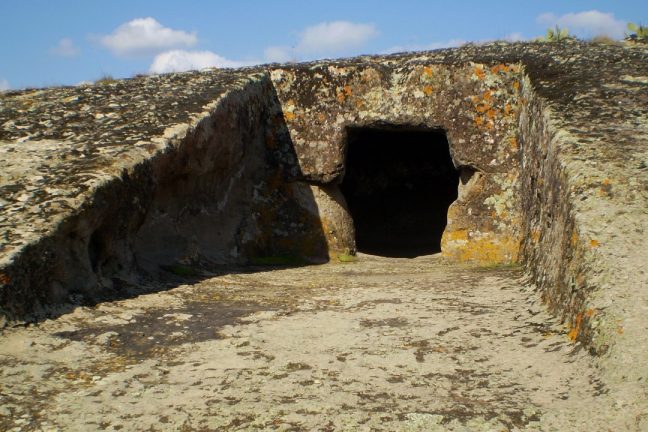
‘Domus de Janas’ is a Sardinian expression meaning ‘house of the fairies’. Legends tell of beings that are not particularly spiritual – demons, somewhere between human and divine.

Sardegna has a wine-making tradition stretching back thousands of years; the earliest evidence of wine-making dates as far back as 1400 BC.

There is a story linked to the island of Tavolara which tells that King Carlo Alberto of Savoy appointed his only son as king of the island.

The Ludurru necropolis is situated in Buddusò, and the domus de janas date back to 3200–2800 BC, famous examples of the Sardegna Neolithic period

The Neptune Caves are spectacular caves dating back to prehistoric times. They are located at Alghero, in Northern Sardinia

The Church of St Francis in Alghero is one of the finest examples of Catalan Gothic architecture in Sardegna